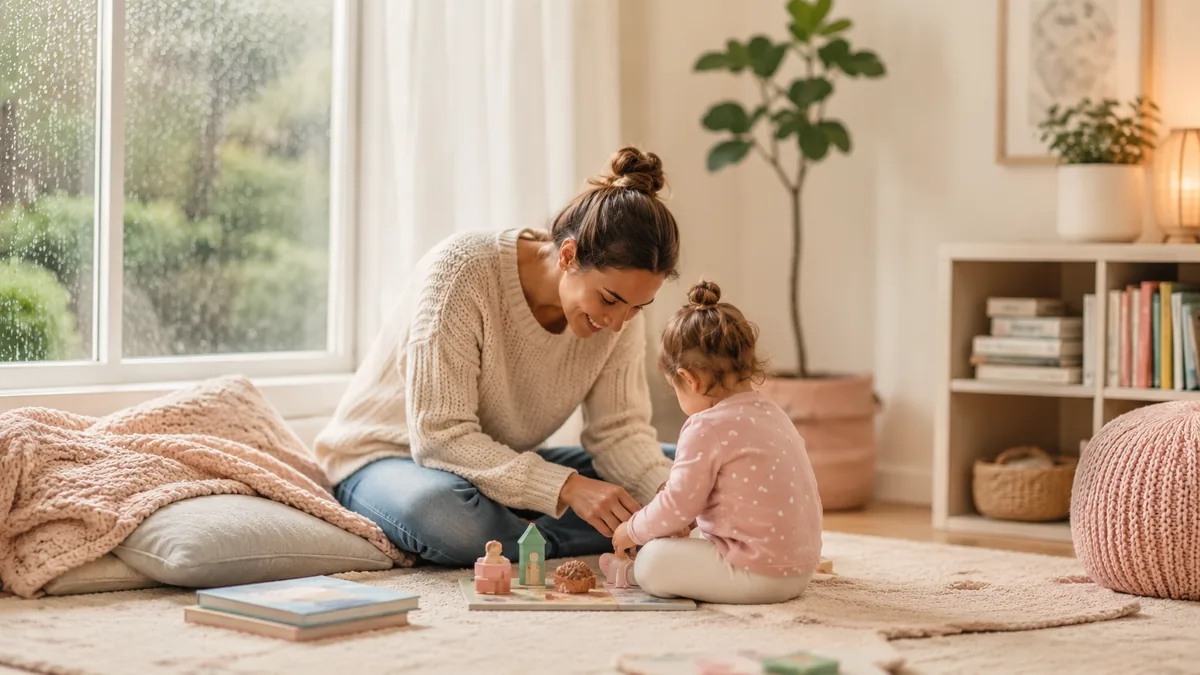
A sensory bin is simply a container of safe material your child can scoop, pour, dig through, and explore with their hands. It sounds almost too simple, yet for little ones it is rich, absorbing play — the kind that buys you a calm twenty minutes while your child builds focus, coordination, and language. The best part: the most loved sensory bin ideas toddlers reach for again and again come straight from your kitchen cupboard, no special shopping trip required.
Sensory play gives a child's growing brain a workout in the gentlest way. Running fingers through rice, squeezing wet dough, or chasing floating pasta in water builds fine-motor control and patience. It also opens up easy, natural talk: full, empty, soft, cold, more, all gone. You don't need a script — just narrate what you both notice. Below are eight setups grouped by age, but treat the ages as a guide and let your own child's stage and habits lead. A short word on cleanup comes with each one, because the cleanup question is usually what keeps tired parents from saying yes.
For babies and early toddlers (about 6–18 months)
At this stage almost everything goes in the mouth, so the rule is simple: fillers must be edible and safe to taste. Sit your baby in a high chair or on a wipeable mat and stay right beside them the entire time.
1. Cooked plain pasta
Boil a handful of large pasta shapes (penne, shells, fusilli), rinse until cool, and tip them into a shallow tray. What your child explores: the slippery, squishy texture — grabbing, dropping, and mouthing it safely. A drop of olive oil keeps it from sticking. Cleanup: it's food, so anything that lands on the floor sweeps straight into the bin; wipe the tray and you're done.
2. Plain cooked rice or oats
Spread a thin layer of cooked, cooled plain rice or thick oatmeal across a tray. What your child explores: patting, smearing, and pressing — a soft, forgiving texture that's fine to taste. Cleanup: best done at the high chair; a damp cloth and a quick floor sweep handle the rest. Keep portions small so there's less to wipe.
3. A shallow water tray
Pour a little lukewarm water into a low tray and add a cup, a sponge, and a floating toy. What your child explores: splashing, pouring, and the feel of wet versus dry as they squeeze the sponge. Safety: even a shallow tray needs constant, hands-on supervision — never step away from water play, and empty the tray the moment you're finished. Cleanup: lay a towel underneath, then wring it out; the water itself dries fast.
For toddlers (about 18 months–3 years)
Many children are still mouthing things in this range, so keep watching closely. If your child no longer puts things in their mouth, you can introduce dry fillers — but stay nearby and put them away the instant a piece heads toward the mouth.
4. Dry rice with scoops
Fill a deep tub with dry rice and add measuring cups, spoons, and a small funnel. What your child explores: scooping, pouring, and the satisfying rush of rice through fingers — wonderful for fine-motor control. Safety: dry rice is a choking hazard, so this is only for children past the mouthing stage, with you right there. Cleanup: set the tub inside a larger sheet or blanket; lift the edges to funnel stray rice back in.
5. Dry pasta with containers
Add a few cups of large dry pasta plus small pots and a muffin tin. What your child explores: sorting, filling, tipping, and the rattly sound pasta makes — early counting talk slips in naturally here. Safety: hard, small pieces are a choking risk; supervise closely and keep it to non-mouthing children. Cleanup: the larger pieces are quick to spot and gather by hand, and the pasta stores for next time.
6. Plain flour "snow"
Sift a layer of plain flour into a tray for drawing roads and shapes with a finger. What your child explores: the silky, powdery feel and the marks that appear and vanish. Cleanup: flour travels, so lay it down outdoors or over a wipeable mat; a vacuum beats a wet cloth, which can turn flour to paste. Expect a little dust — that's part of the fun.
For older toddlers and preschoolers (about 3–5 years)
Most children this age are past mouthing and can handle richer, messier setups with light supervision. Keep an eye out anyway, and remember any younger sibling nearby changes the rules back to edible-only.
7. Bean and lentil scoop-and-sort
Mix dried beans, lentils, and chickpeas in a tub with bowls, tongs, and a scoop. What your child explores: sorting by colour and size, using tongs (great for the hand muscles that lead to writing), and counting out loud. Safety: dried beans are small and hard — strictly for non-mouthing children, never with babies in the room. Cleanup: beans are heavy and roll predictably, so a tray underneath catches most; store them dry for reuse.
8. Soft cloud dough
Stir together about eight parts plain flour to one part cooking oil until it holds a shape when squeezed but crumbles when released. What your child explores: moulding, pressing, and the unusual feel that's neither wet nor dry — calming, focused play. Cleanup: it brushes off skin easily and sweeps up in clumps; work over a mat and store it in a sealed tub for a few days of reuse.
Making sensory play easy to say yes to
The trick to doing this often is keeping it low-effort. Set the bin on a wipeable mat, an old sheet, or take it outside, and the mess stays contained. Offer one or two simple tools rather than a pile — fewer pieces means a happier child and a faster tidy-up. Keep sessions short and end while it's still fun; ten focused minutes is plenty. And let your child lead. There's no right way to play in a sensory bin, and the quiet, open-ended nature of it is exactly what makes it so good for them.
You know your child best. If your little one still mouths everything, stick to edible fillers and stay within arm's reach, or simply wait a few months and try again. If you ever have a concern about how your child explores, mouths, or reacts to textures, your pediatrician is always the right person to ask.
This article is for general parenting support and is not medical advice.