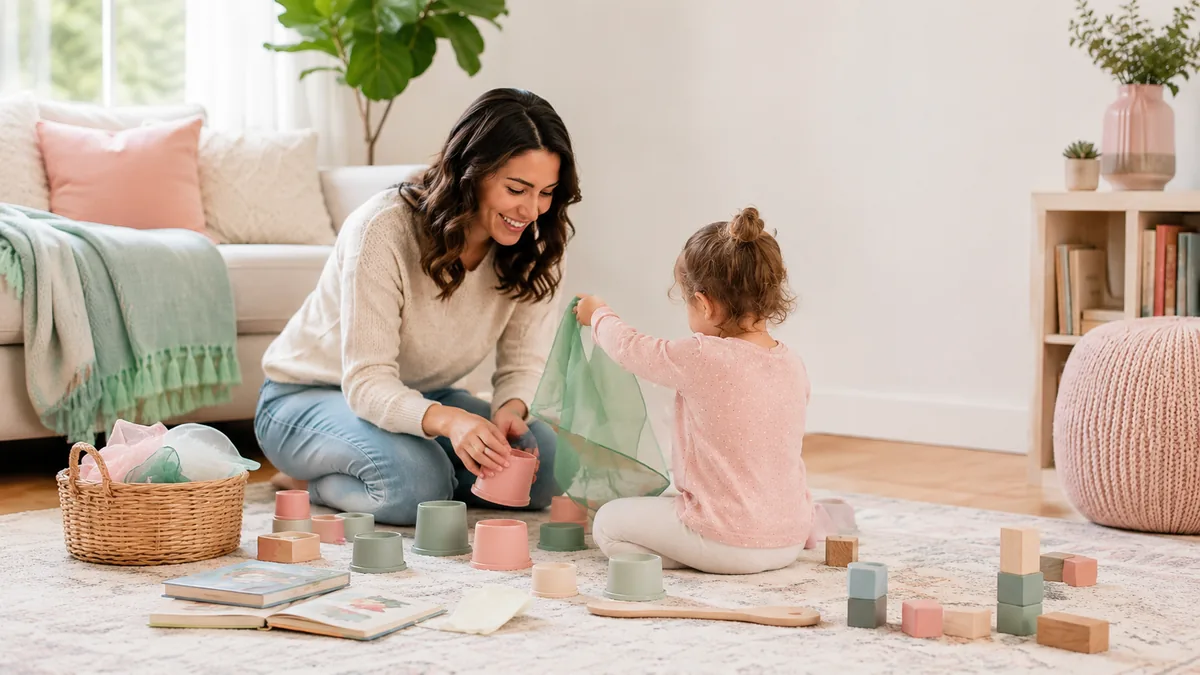
If you've ever wondered about the best age to learn English for your child, you're in good company — it's one of the most common questions parents ask. The short, reassuring answer is this: the early years are a wonderful time for soaking up sounds and words, but there is no single magic age, and it is genuinely never too late to begin. What helps a child most isn't perfect timing. It's gentle, consistent exposure wrapped in warmth and everyday moments you already share.
Right alongside that question comes a worry: "Will two languages confuse my child or slow down their speech?" It's a fear passed down through families and friends for years. The good news is that it simply isn't true. Let's walk through what the early years really offer, why "language mixing" is normal rather than a warning sign, and how to support both languages at home without any pressure.
Is there a golden age to start English?
Young children are remarkable at noticing the sounds and rhythms of language. In the first few years, their brains are busy tuning in to the voices around them, so early exposure to English really can give your child a comfortable, natural feel for the language. That's why so many parents like the idea of starting young — and if your little one is a baby or toddler right now, that's a lovely time to weave in a few English words through play, songs, and books.
But here's the part that takes the pressure off: "early" does not mean "now or never." Children, teenagers, and even adults learn new languages all the time. A child who starts English at three, four, or five is not behind. What matters far more than the exact starting age is steady, friendly exposure over time — a little most days beats a big push once in a while. So if you haven't started yet, take a breath. You haven't missed a window. You can begin today, gently, and that's enough.
The "language mixing" myth, gently busted
One of the most persistent worries about raising a bilingual child is that hearing two languages will cause confusion or a speech delay. Here's the honest, reassuring truth: growing up with two languages does not cause speech delays, language disorders, or lasting confusion. Children's minds are built to handle more than one language at once. Around the world, vast numbers of children grow up bilingual, or with three or more languages, as a normal part of life.
So what about the moments when your child blends English and Vietnamese in the same sentence — saying something like "Con muốn more milk"? That blending has a name: code-switching, which is just a plain way of saying "switching between languages." Far from being a problem, it's a sign your child is actively working with both languages and reaching for whichever word comes quickest. Adults who speak two languages do it too. For little ones, this kind of brief mixing is completely normal and tends to fade on its own as they grow and sort the two languages into place.
How to support both languages calmly at home
You don't need flashcards, apps full of drills, or a perfect schedule. The most powerful tool is simply living your family's languages out loud, in the small moments. Here are a few calm, low-pressure ways to do it:
Keep it part of everyday life
Talk through ordinary moments and let English ride along with your mother tongue — naming food at dinner, body parts in the bath, or animals on a walk. A few words a day, repeated naturally, do more than a big lesson once a week.
Parent tip: Pick one daily routine, like mealtime, to be your light "English moment" so it feels easy instead of forced.
Sing, read, and play
Songs, nursery rhymes, and picture books are some of the friendliest ways for children to absorb a new language. Sing an English rhyme, then a Vietnamese one. Point at pictures and name them in both. There's no test at the end — just play.
Parent tip: Re-reading the same favorite book is great. The repetition gives both languages a chance to settle in.
Stay consistent, not perfect
Consistency matters more than any magic age, but consistency doesn't mean strict. Some families let one parent lean toward English and the other toward Vietnamese; others mix freely. Any approach that you can keep up gently, over time, will work.
Parent tip: If today was an all-Vietnamese or all-English day, that's completely fine. Tomorrow is another chance.
What about the mother tongue?
Many parents quietly worry about the opposite problem too: "If we add English, will my child lose their Vietnamese?" This is a loving worry, and the answer is gentle. Your mother tongue is the language of home, family, grandparents, and culture — and it stays strong when it stays in daily use. Speaking Vietnamese at home, telling stories, singing the songs your own parents sang, and chatting through ordinary days all keep that language alive and rooted.
Adding English does not take away from Vietnamese. The two grow side by side, each one supporting your child's thinking and connection. You are not choosing between languages — you are giving your child the gift of more than one. If anything, a strong, warm mother tongue is the foundation that makes learning any other language easier. So keep your home language front and center, and let English be a friendly companion alongside it.
This article is for general parenting support and is not medical advice.