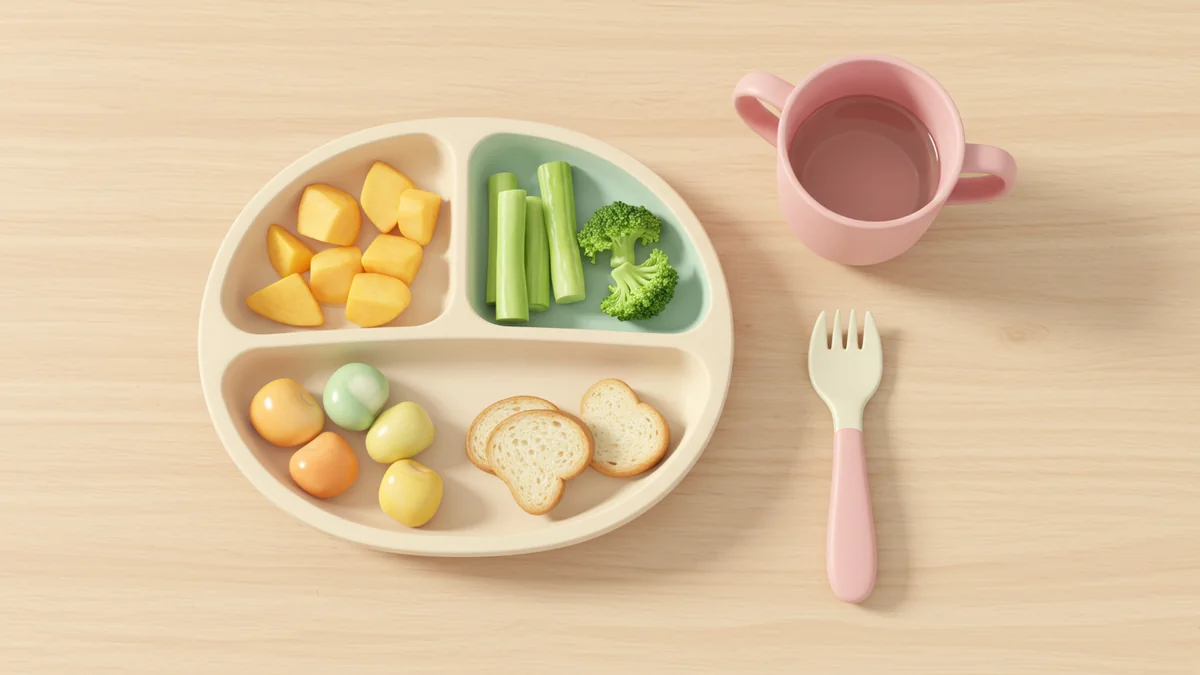
Some days your toddler eats everything on the plate. Other days, the same bowl of pasta gets pushed away like a foreign object. If that sounds familiar, you are not alone — picky days are a completely normal part of toddlerhood, and they do not mean anything is wrong with you or your child.
The good news is that mealtimes do not have to be a battle. With a few low-pressure strategies and a handful of go-to meal ideas, you can keep things calm, colorful, and maybe even a little fun — even on the trickiest days.
Why picky eating happens (and why calm is your superpower)
Between ages one and five, children go through a natural phase of food caution. Their appetite swings with developmental phases, new molars, and big developmental leaps. A toddler refusing broccoli today may happily eat it three weeks from now — especially if it keeps showing up on the plate without drama.
Research-free wisdom that holds up in real kitchens: pressure at the table tends to backfire. When mealtimes feel tense, toddlers dig in harder. When the table feels relaxed and predictable, curiosity has room to grow. Your calm presence is genuinely the most useful thing you can bring to the meal.
The family-food sharing approach
One of the simplest shifts you can make is moving away from cooking a "toddler meal" and a "grown-up meal" separately. When your child sees the same food on your plate, it quietly signals that the food is normal and safe. You do not need to make a fuss about it — just serve a small portion of whatever the family is having, adjusted for size and texture.
- Soft-cooked pasta with olive oil and a sprinkle of cheese works for everyone at the table.
- A simple soup with soft vegetables is easy to ladle into a small bowl alongside the main family serving.
- Scrambled eggs, soft rice, or torn flatbread are foods most toddlers will at least touch — and that is a win.
As always, follow your pediatrician's guidance on introducing specific foods, especially during your child's first couple of years.
Five low-prep meal ideas for picky days
The Deconstructed Plate
Instead of mixing everything together, keep components separate on the plate — a small pile of soft rice, a few pieces of steamed vegetable, and a protein like shredded chicken or a small bit of egg. Toddlers often feel safer when foods do not touch, and a deconstructed plate gives them a quiet sense of control.
Parent tip: Use a plate with dividers if you have one, or just leave clear space between items. The visual separation really does matter to many toddlers.
Why it helps: Removing the "foods are mixed" barrier lowers the stakes and makes the plate feel less overwhelming.
Finger Food Spread
A small spread of bite-sized finger foods — soft fruit pieces, cubes of soft cheese, cooked peas, small strips of soft bread — lets your toddler graze and explore at their own pace. There is no wrong order, no utensil pressure, and plenty of tactile fun built right in.
Parent tip: Include at least one item you are confident they already like alongside one new or less-familiar food. Familiarity anchors the plate.
Why it helps: Toddlers learn through touch and repetition. Handling food — even without eating it — counts as positive exposure.
Soft Egg Any Way
Scrambled, soft-boiled (chopped), or lightly fried — eggs are one of the most toddler-flexible foods around. Serve them plain, with a tiny bit of mild seasoning, or folded around a soft vegetable they already enjoy. Keep the texture soft and the portion small.
Parent tip: Let your toddler watch you cook if they are curious. That small moment of involvement can spark more willingness to try.
Why it helps: Eggs are quick to prepare and easy to adjust, making them a reliable fallback on the toughest picky days.
Mild Soup with Soft Bits
A simple broth with very soft-cooked vegetables and small pasta or rice pieces is easy to eat and easy to modify. Keep the broth mild and let your toddler help decide what goes in — even pointing at ingredients on the counter counts as participation.
Parent tip: Serve it in a small cup if a bowl feels like too much. Sometimes a smaller vessel makes the meal feel more manageable.
Why it helps: Warm, familiar textures tend to feel safe. Soup also works well when a toddler is tired or off their routine.
The "Same as Mine" Snack Plate
Put together a small plate for yourself and an identical small plate for your toddler — soft fruit, a little bread, a mild spread, whatever you are having. Sit together and eat without commentary on what they do or do not pick up. Just share the moment.
Parent tip: Resist the urge to narrate their choices. "Oh, you tried the banana!" can feel like pressure. Quiet shared eating is underrated.
Why it helps: Social modeling is one of the most powerful tools for expanding a toddler's willingness to try foods — and it costs you nothing extra.
A few gentle reminders for picky-day peace
- Every child is different. What works beautifully for a neighbor's toddler may not land with yours, and that is completely fine.
- Repeated exposure without pressure is the long game. A food rejected ten times might be accepted on try eleven.
- Your own stress at the table is something toddlers pick up on quickly. Taking a breath before sitting down genuinely helps.
- Keep portions small. A full plate can feel daunting; a tiny pile feels achievable.
- If you ever have concerns about your child's eating patterns or nutrition, your pediatrician is the right person to ask.
The takeaway
Picky days are not a sign of failure — they are a sign of a normally developing toddler figuring out their world. Your role at the table is simply to offer, stay calm, and keep showing up. Over time, that consistency builds the trust that makes toddlers more willing to explore. You have got this.
This article is for general parenting support only and is not medical advice.