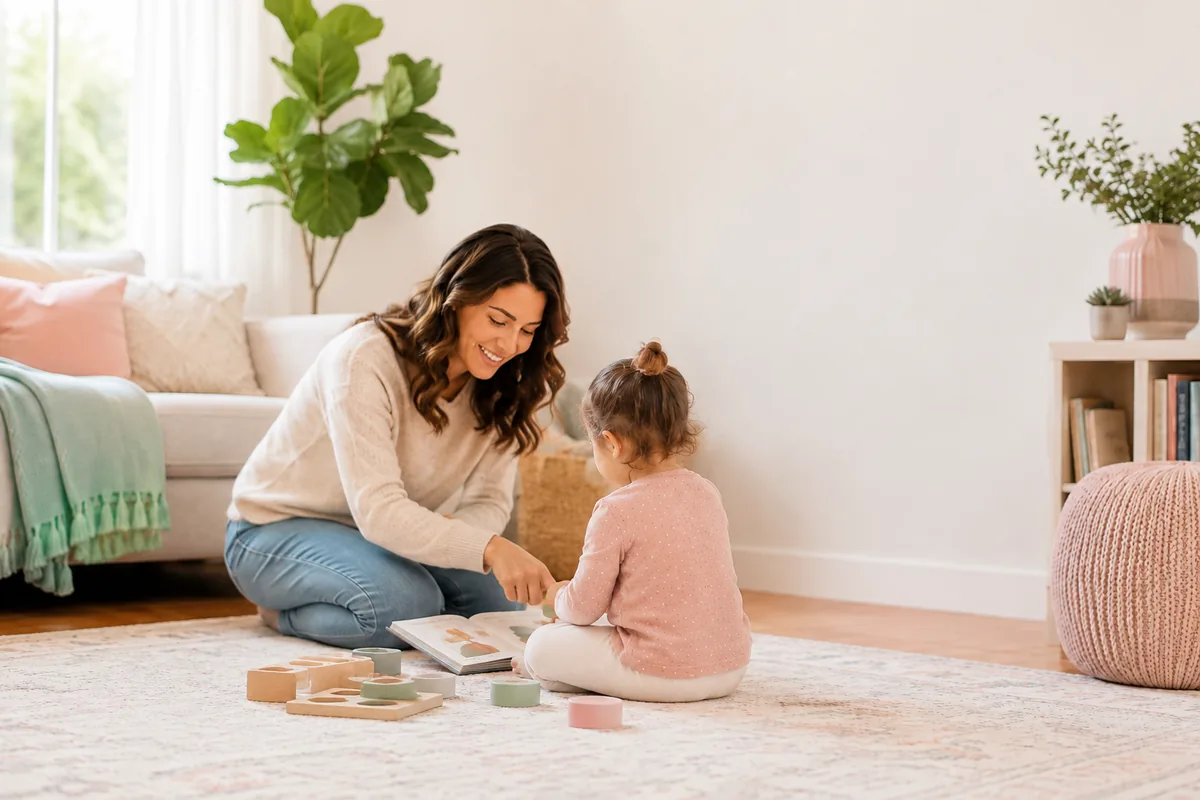
You picture a peaceful scene: your toddler tucked under one arm, a gentle picture book, soft light. Then real life happens — they grab the book, flip three pages at once, climb off your lap, and run to fetch a toy. If "reading aloud to toddlers" feels more like a wrestling match than a cozy ritual, you're in good company. The good news: a wriggly child can absolutely become a book-loving one, and it doesn't take a perfectly still little body. It just takes a few small tweaks to how you start.
This guide is here to make nightly reading feel doable, not like one more thing to get "right." We'll look at why even a few minutes of reading helps, how to begin when your child won't sit still, which board books suit which age, and how to weave it into bedtime so it sticks. No pressure, no performance — just you, your child, and a book.
Why nightly reading helps
Reading aloud to toddlers is one of the simplest, warmest things you can do together, and it quietly supports a lot at once.
It feeds early talking
Picture books pour new words into your child's day — words they might not hear over breakfast or in the bath. Naming what you see, pointing to pictures, and repeating favorite lines all give your child language tied to something they can look at and touch. Hearing the same book again and again is a feature, not a bug: repetition is how words settle in.
It deepens your bond
A book gives you a reason to slow down, snuggle close, and share attention on the same page. That cozy closeness — your voice, your warmth, your full focus for a few minutes — matters as much as the story itself. Your child learns that books mean time with you, and that's a lovely thing to attach to reading.
It softens bedtime
A predictable, quiet story can be a gentle off-ramp from a busy day. The familiar rhythm of "bath, book, bed" signals to a toddler's body that wind-down is coming. You're not just reading a book — you're helping the evening shift into a calmer gear.
How to start when your child won't sit still
Here's the reframe that changes everything: a wriggly toddler isn't failing at reading — they're a toddler. Movement is normal. The goal isn't a child sitting like a statue; it's a child who enjoys books. These small shifts make that far easier.
Keep books short
Start with sturdy little board books you can finish in a minute or two. A short book that gets enjoyed beats a long one that ends in tears every time. Five happy minutes is a win — you can always read another if your child is still leaning in.
Let them turn the pages
Handing over the page-turning gives wriggly hands a job and a sense of control. If they flip ahead, skip back, or linger on one picture, just go with it. They're handling a book, choosing what to look at, and staying involved — which is exactly the point.
Point and name
You don't have to read every printed word. Point to a dog and say "dog — woof!" Point to the moon, the cup, the baby. Naming pictures turns a book into a little back-and-forth game, and it keeps even a busy toddler tuned in to what's on the page.
Do the voices
A silly growl for the bear, a tiny squeak for the mouse, a big yawn for the sleepy character — a little drama makes the book irresistible. You'll feel a bit goofy, and that's the magic. Your toddler will often freeze mid-wriggle just to see what voice comes next.
Follow their lead
If your child wants to stay on the truck page for ages, stay there. If they want the same book five nights running, read it five nights running. Letting your child steer keeps reading something they choose, not something done to them — and that's what builds the love of it.
Don't force finishing
If your toddler closes the book or wanders off, that's okay — you can simply stop on a friendly note. Pushing to "finish the story" can turn books into a battle. Ending while it still feels good means your child comes back tomorrow wanting more.
Board-book picks by age
You don't need a big library — a small stack of well-loved favorites does more than a shelf of untouched books. Here's a rough guide to what tends to land at each stage.
Babies (around 0–12 months)
Look for chunky board books with high-contrast pictures, simple single objects, and touch-and-feel textures. Books that fit little hands and survive a chew are perfect. At this age, a "reading" might just be you talking about one picture while your baby mouths the corner — that's completely fine.
Younger toddlers (around 1–2 years)
Lift-the-flap and peekaboo books, lots of animals and everyday objects, and one short line per page are big hits. Repetitive, rhyming text invites your child to chime in, and interactive flaps give busy hands something to do while they listen.
Older toddlers (around 2–5 years)
Now you can move toward simple stories with a beginning, middle, and end, books about feelings or daily routines, and counting or color themes. Stories your child can relate to — a bedtime, a trip to the park — help them connect the pages to their own little world.
Make it a bedtime ritual
The easiest way to make nightly reading actually happen is to anchor it to something you already do. Slot the book in at the same point each evening — after the bath, after teeth, once the lights are low — so it becomes part of the wind-down your child can predict. A predictable order ("bath, book, bed") helps a toddler feel safe and ready for sleep.
Keep a few favorites within reach of the bed so reaching for a book is effortless. Let your child help pick tonight's story — that little bit of choice often turns a reluctant listener into an eager one. And remember: it's perfectly fine to keep it tiny. One short book, read with a warm voice, is a complete and lovely bedtime ritual all on its own.
This article is for general parenting support and is not medical advice. If you have concerns about your child's development, hearing, or sleep, please see your pediatrician or a qualified professional for assessment.