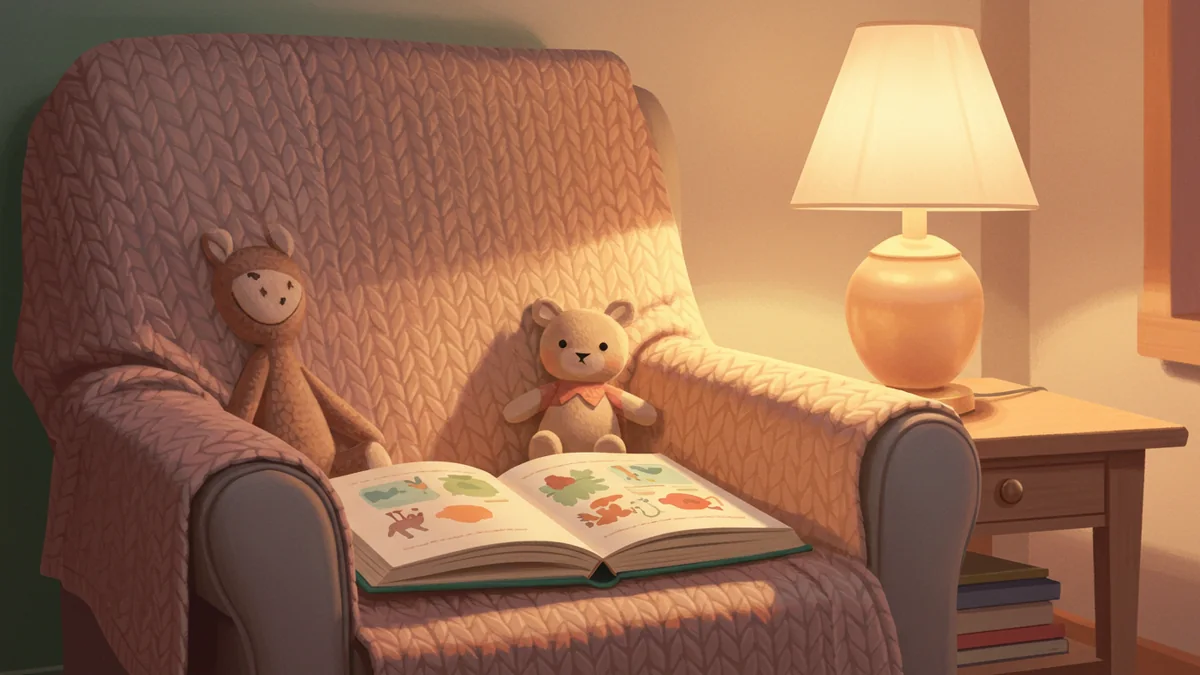
There is something quietly remarkable about settling in with your child and opening a book together. Before the first word is even read, your child feels it: the warmth of your body, the slowing of your breath, the signal that this moment belongs entirely to the two of you. Reading aloud is one of the most powerful gifts you can give a young child — and it costs nothing but a little time.
Whether your baby is too young to follow the plot, or your toddler is demanding the same dinosaur book for the fifteenth time this week, story time is doing more than you might realize. This article explores why reading aloud matters so much in the early years, and how to make it feel effortless and enjoyable for both of you.
Why your voice is the most important ingredient
You do not need a theatrical performance or a perfectly modulated reading voice. What your child responds to is you — the familiar cadence of how you speak, the way your voice softens on a tender moment, the tiny pause you make before a funny part. Long before a child understands individual words, they are tuned in to the emotional texture of your voice. When you read aloud, you are giving them a complete sensory experience: sound, rhythm, closeness, and safety.
This is why audio recordings or screens, however well-produced, simply cannot replicate what happens when you read to your child in person. The back-and-forth — a glance, a giggle, a pointed finger — is where so much of the connection and learning lives. Your voice anchors everything.
Reading aloud before your child can talk
Parents sometimes wonder whether reading to a very young baby makes any difference. It absolutely does. Babies are absorbing the sounds, rhythms, and patterns of language from their very first days. When you read aloud, even to a newborn curled against your chest, you are:
- Filling their world with the sounds and structures of language
- Establishing a calming routine they will come to expect and love
- Building the neural pathways that will later support understanding words
- Creating a shared experience that deepens your bond
You are not teaching them to read. You are doing something more foundational: you are showing them that language is warm, safe, and worth paying attention to.
Five ways to make story time feel magical
Create a cozy, predictable spot
Choose one comfortable place — a reading chair, a corner of the sofa, or a floor cushion — and make it your story spot. Dim the lights slightly, settle in close, and let your child know this space means stories are coming. Predictability is deeply reassuring to young children.
Parent tip: A small, low basket of books your child can reach on their own encourages them to "invite" story time themselves.
Why it helps: Familiar cues lower arousal and prime the brain for focused, relaxed attention — the ideal state for taking in language.
Follow your child's lead with the same book
If your toddler brings you the same book day after day, resist the urge to redirect them to something new. Repetition is not boredom — it is mastery in progress. Each time they hear a familiar story, they are predicting what comes next, filling in words, and feeling the quiet triumph of knowing how it ends.
Parent tip: Pause before a phrase they know well and let them "fill in the blank." Watch their face light up when they get it right.
Why it helps: Repetition deepens vocabulary retention and builds a child's confidence in language long before they can read independently.
Make it a conversation, not a performance
You do not have to read every word on the page. Point at pictures and ask simple questions: "What do you see here?" or "How do you think the bunny feels?" For very young babies, narrate what you notice: "Look — a big red hat." These back-and-forth moments turn a monologue into a dialogue.
Parent tip: Keep questions open and low-pressure. There are no wrong answers — the point is the exchange, not the answer.
Why it helps: Conversational reading expands the range of words children encounter and teaches them that communication is a two-way experience.
Use different voices (even a little)
You do not need to be a voice actor. Even a small shift — a slightly lower pitch for the bear, a squeaky voice for the mouse — is enough to signal that different characters have different perspectives. Young children find this delightful, and it makes the story feel alive.
Parent tip: If voices feel awkward at first, just vary your pace and volume instead — slow and quiet for suspense, bright and quick for excitement.
Why it helps: Vocal variety holds attention and gives children early exposure to the idea that different people have different voices, feelings, and points of view.
End with a moment of stillness
After the last page, resist rushing to the next activity. Let the story settle. A quiet "I loved that one" or a gentle cuddle signals that this was meaningful time. Children carry these small rituals with them for years.
Parent tip: Bedtime story time is especially powerful as a wind-down signal — the predictable routine tells the body it is time to rest.
Why it helps: A calm close helps transition the nervous system from engaged to restful, making story time a natural bridge to sleep or quiet play.
Story ideas when you need a starting point
Some days the hardest part is simply knowing what to read. ParentPilot AI includes ready-to-use story prompts and short guided narratives matched to your child's age and interests — so even on a tired Tuesday evening, you always have a starting point. The stories are designed to be read in your own voice, in your own way, keeping the experience personal and warm.
Every child is different, and what captures one child's imagination may not captivate another. Follow your child's cues, rotate between old favorites and new discoveries, and trust that any book read together — no matter how simple — is time well spent.
A small habit with a lasting impact
Reading aloud does not need to be long, elaborate, or perfectly done. Five minutes of genuine, present connection over a picture book is more valuable than a longer session where you are distracted. Show up, snuggle in, and read. That is really all it takes. Over days, months, and years, those small moments accumulate into something your child will carry with them long after they have learned to read on their own — the memory of your voice, and how safe it made them feel.
This article is for general parenting support only and is not medical advice.