Somewhere between the group chat and the comment section, most parents pick up the same worry: "if my toddler watches a show, are they falling behind on talking?" It's a fair question, and it deserves a straight answer instead of a scare. Here's the honest version — screen time itself isn't the main character in this story. What happens around it is.
Myth: "Screen time = delayed talking"
It's tempting to treat screen minutes like a dosage — as if there's a magic number that flips a switch. Real life is messier than that. A toddler who watches a short, calm show with a parent sitting beside them, narrating and pointing things out, is having a very different experience than a toddler parked in front of background TV for hours with no one talking to them at all. Same "screen time" on paper, completely different amount of actual talking happening in the room.
What pediatric guidance generally says
Many pediatric groups suggest limiting passive screen use for children under 2, and keeping screen time modest and supervised for preschoolers — not because a screen is dangerous in small doses, but because time on a screen is time not spent talking, playing, or exploring with a person. If a screen habit is worrying you, your pediatrician is the right person to talk it through with — they know your child and can give guidance no article ever can.
What actually seems to matter more
Three things tend to matter far more than the raw number of minutes:
- Whether a person is talking with your child, not just near them
- Whether the screen replaces talking time or simply fills a quiet gap
- Whether the rest of the day still has plenty of back-and-forth moments
A toddler who gets a short show during a genuinely hard hour — dinner prep, a headache, a meltdown you need thirty minutes to recover from — and otherwise has a day full of talking, singing, and play is not the same story as a toddler whose main source of sound all day is a screen.
If you do use a screen, make it a talking moment too
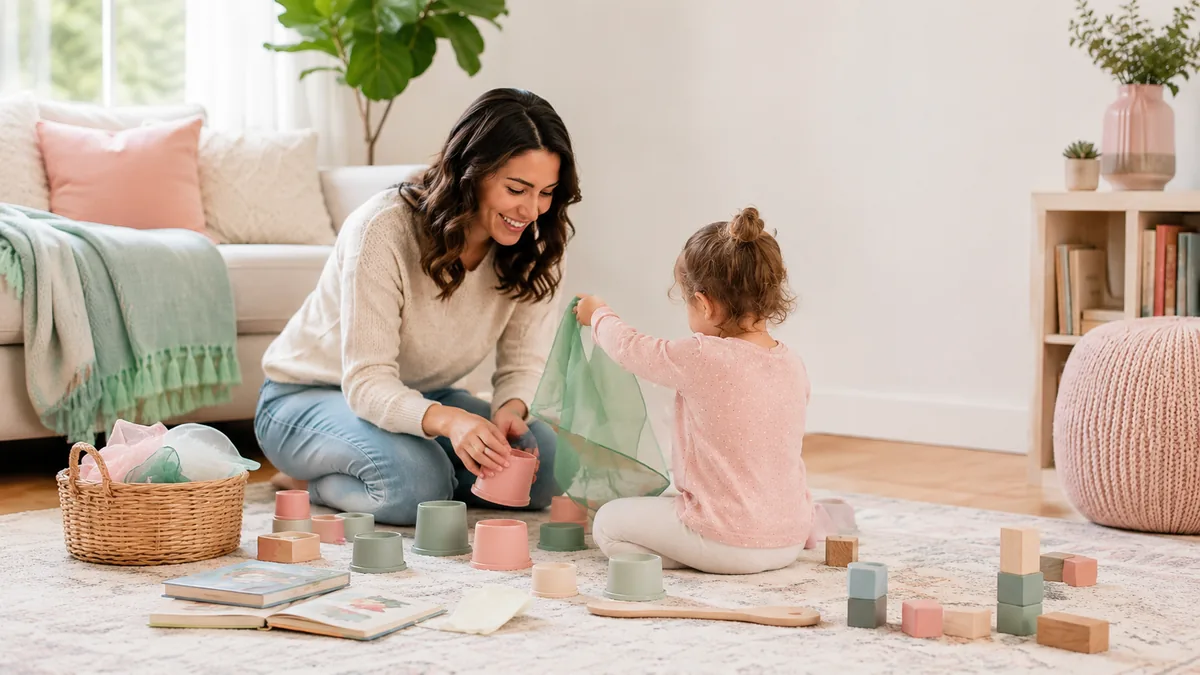
You don't have to choose between "no screens ever" and "screens with no benefit." Sitting with your child during a short show and narrating what's happening — "Oh no, where did the puppy go? There he is!" — turns passive watching into something closer to reading a book together. It's not about banning the show. It's about not leaving the room.
When it's worth asking a professional
Screen habits are one small piece of a much bigger picture. If you're noticing your child isn't babbling, pointing, or responding to their name around the ages when most children do, that's worth a conversation with your pediatrician regardless of screen habits — it's simply not something a blog post can assess. This article can't and doesn't try to diagnose anything; it's here to take the guilt out of an ordinary parenting question, not to replace medical guidance.
One simple way to build in more talking
If you're looking for an easy way to protect a little more talking time in the day without a big schedule overhaul, ParentPilot AI offers short, parent-led missions — roughly five minutes each — that you do together with your child, screen-free. It's one small, honest tool among many, not a replacement for the talking you're already doing.
This article is for general parenting support and is not medical advice. If you have concerns about your child's development, please talk to your pediatrician.