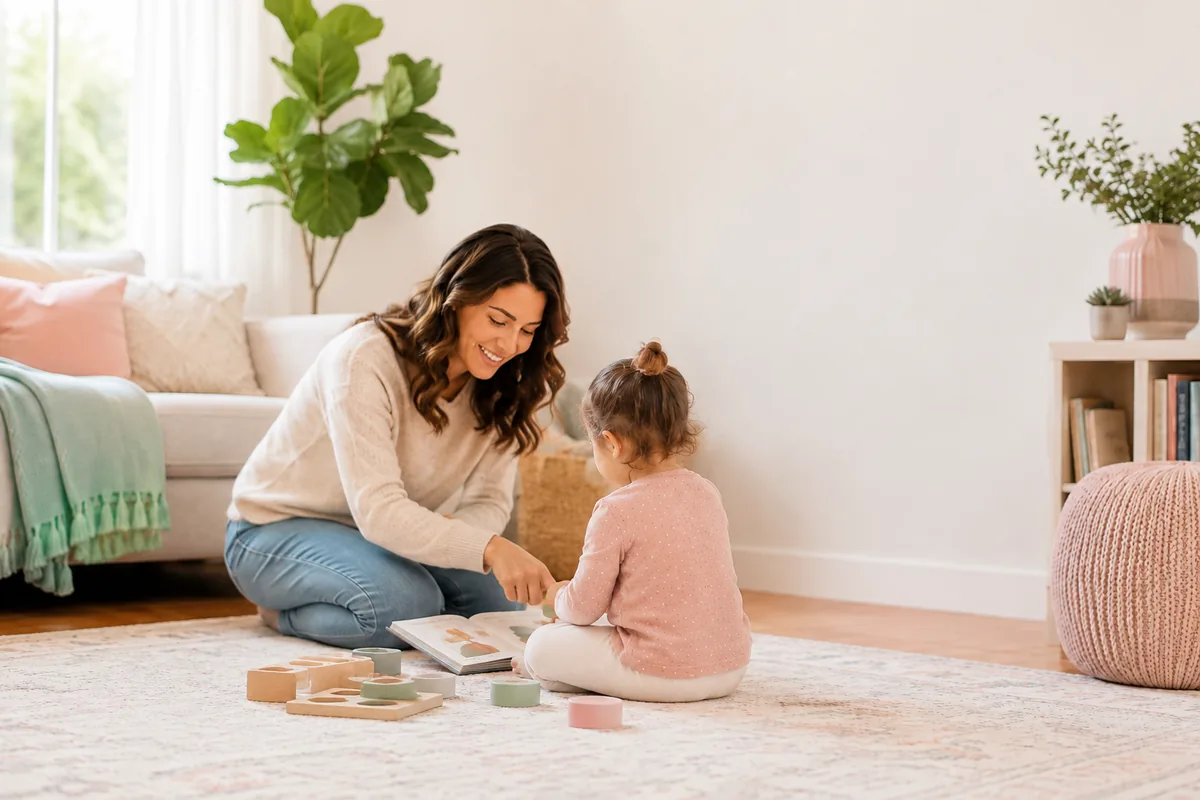
Grandparents often have something busy parents are short on: unhurried time. No work call waiting, no dinner to start, no next errand — just an afternoon to sit on the floor and repeat the same silly song for the fifth time without checking the clock. That patience turns out to be genuinely great for a toddler's talking, and it's worth leaning into on purpose.
Why grandparent time is different from parent time
A grandparent watching a toddler for an afternoon usually isn't juggling five other tasks at once. That lower pressure tends to slow everything down — slower speech, longer pauses, more room for a toddler to actually get a word out before the conversation moves on. None of this requires any special training, just the simple fact of having fewer things pulling at their attention.
4 easy ways grandparents can build talking into visits
- Tell the same family story more than once — repetition is a feature, not a flaw
- Narrate old routines — cooking, gardening, folding laundry — out loud as they happen
- Sing the songs they grew up with, even half-remembered
- Ask real questions and then wait — grandparents are often naturally patient about the pause
A quiet gift: family words and old expressions
Grandparents often carry phrases, sayings, and words that don't come up anywhere else — nicknames for foods, old sayings, a grandmother's particular way of describing the weather. Hearing this from a grandparent instead of a book gives a toddler a small, real thread to a family's own history, alongside all the everyday vocabulary they're picking up everywhere else.
When distance makes visits rare
Not every family gets frequent in-person time with grandparents. A short video call where a grandparent tells one small story, sings one song, or just asks about the toddler's day can carry a surprising amount of the same benefit — the warmth and the repetition matter more than the format.
One simple way to build on visits
If you'd like an easy idea to hand a grandparent before a visit, ParentPilot AI offers short, parent-led missions — roughly five minutes each — built around ordinary moments like these. It's one small tool among many, not a replacement for the time your child already spends with the people who love them.
This article is for general parenting support and is not medical advice.