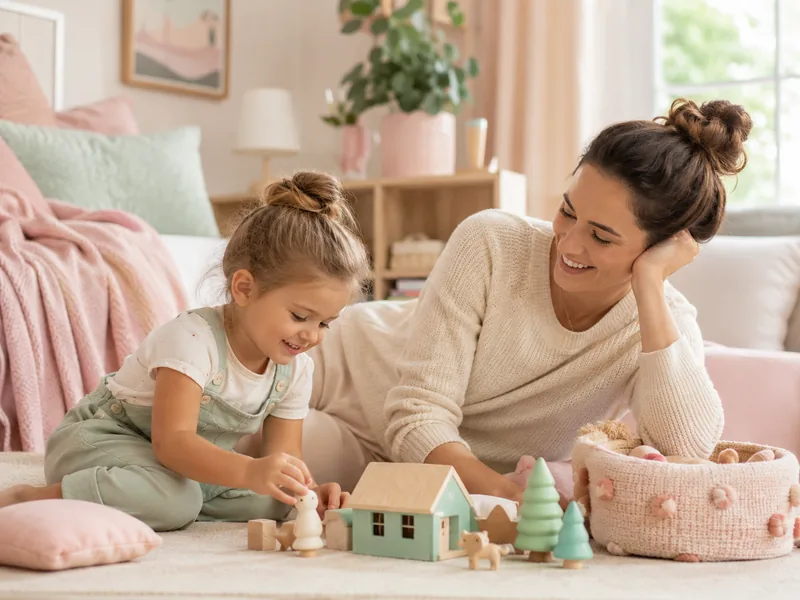
Some of the best play your child will ever have costs nothing and takes about two minutes to set up. A cushion, a cardboard box, a pot from the kitchen — to a little one, these are treasure. The screen-free play ideas below are sorted by age, from tiny babies to busy preschoolers, and every single one uses things you already have at home. The joy here isn't in buying anything; it's in those small, giggly moments of you and your child discovering something together.
You don't need to be a craft genius or fill the whole afternoon. Pick one idea, set it out, and let your child lead. If they wander off after five minutes, that's a complete success — short bursts of free, hands-on play are exactly how little ones learn best.
Babies: 0–12 months
At this age the world is brand new, so the simplest things feel magical. Your face, your voice, and a few safe household objects are plenty.
- 1. Scarf peekaboo. Drape a light scarf or muslin over your face, then pull it away with a soft "boo!" Babies adore the surprise — and it teaches them you always come back.
- 2. Pot-lid drum. Sit your baby down with an upturned pot and a wooden spoon. Let them bang, listen, and discover that they made that sound.
- 3. Crinkle paper. A clean sheet of paper makes a wonderful crinkly noise. Hold it for them to swat and grab (and keep it out of the mouth).
- 4. Cushion crawl course. Lay a few cushions on the floor and let your baby crawl, climb, and tumble safely over the soft bumps.
- 5. Mirror chat. Hold your baby up to a mirror and talk to "the other baby." Smiling at their own reflection is a tiny social milestone.
- 6. Tummy-time treasure. Place one interesting object just out of reach during tummy time to gently invite your baby to stretch and reach.
- 7. Container fill and dump. Give your seated baby a small box and a few large, safe items to drop in and tip out, over and over. The repetition is the point.
Toddlers: 1–2 years
Now they're moving, pointing, and copying everything you do. These ideas burn a little energy and feed their growing curiosity.
- 8. Cardboard box car. Sit your toddler in a sturdy box and give them a gentle "ride" across the floor, or let it become a tunnel to crawl through.
- 9. Sock basketball. Roll up socks into soft balls and aim them into a laundry basket. Cheer every throw, hit or miss.
- 10. Water pouring. Pop your toddler in the bath or by a basin with a couple of cups and let them pour water back and forth. Endlessly satisfying.
- 11. Kitchen-pot orchestra. Line up a few pots and containers and let your toddler tap out their own "song" with a wooden spoon.
- 12. Sticker peel. Stickers on a sheet of paper give little fingers brilliant practice at peeling, placing, and a sense of "I did it."
- 13. Pillow stepping stones. Scatter cushions as "islands" and hold hands as your toddler steps from one to the next, building balance and giggles.
Preschoolers: 3–5 years
Older children love a tiny bit of story, challenge, and pretend. They can play more on their own now, which gives you a moment to breathe nearby.
- 14. Indoor fort. Drape a blanket over two chairs to make a cozy den. Add a cushion and a book and it becomes a whole little world.
- 15. Paper boats. Fold a simple paper boat together and float it in a basin or sink. Add a gentle breath for "wind" and watch it sail.
- 16. Box post office. Cut a slot in a box and let your child "post" drawings and scraps of paper through it, then deliver the mail.
- 17. Sorting hunt. Ask your child to gather everything red (or round, or soft) from around the room. Sorting and counting hide inside the fun.
- 18. Kitchen play café. Hand over a few safe pots, spoons, and empty containers and let your little chef "cook" and serve you dinner.
- 19. Tape road map. Stick lengths of masking tape on the floor as roads for toy cars, or as a hopping path to jump along.
- 20. Shadow play. Switch off the main light, grab a torch, and make hand shadows on the wall together. Simple, magical, and calming before bed.
How to make it a daily habit
The secret isn't doing all twenty — it's doing one, most days. Try tying a short play moment to something that already happens, like after breakfast or before bath. Keep a small basket of "play bits" (a few cushions, a box, a couple of pots, some paper) in one spot so you never have to hunt for supplies. Then rotate: one idea today, a different one tomorrow. Even ten unhurried, screen-free minutes, repeated daily, adds up to a childhood full of play — and a lovely little ritual the two of you share.
This article is for general parenting support and is not medical advice.