Some days your toddler runs at full speed from the moment they wake up. They climb, dash, melt down, and bounce back, all before lunch. By late afternoon, they can seem wired and weepy at the same time, and you may feel just as frazzled trying to keep up.
The good news is that calm is something you can gently offer, not something you have to force. With a few slow, screen-free play ideas, you can help a very busy toddler shift down a gear, settle their body, and feel safe and steady again.
Signs your toddler needs to slow down
Toddlers do not always know when they are overstimulated, so they show it through their behavior instead. You might notice your child getting louder, faster, and clumsier, bumping into things or laughing in a wound-up way. Some children get clingy, others push everyone away, and many do both within minutes.
Other gentle signals to watch for include rubbing eyes, sudden tears over small things, trouble settling into any one activity, or a body that just will not stop moving. Every child is different, so trust what you know about yours. These are simply cues that it may be time to lower the volume on the whole environment, not problems to fix.
Soft, slow, sensory-friendly play
When a toddler is overstimulated, the answer is usually less, not more. Calming play tends to be slow, quiet, and gentle on the senses. Dim the lights a little, lower your voice, and let go of any goal beyond simply being together. Here are a few favorites you can reach for.
Soft texture basket
Gather a few soft things from around the house: a fuzzy sock, a smooth scarf, a cotton ball, a worn baby blanket. Sit together and explore them slowly, naming how each one feels. Let your child stroke their own arm or cheek with the softest pieces.
Parent tip: Move at half your normal speed and almost whisper. Your calm pace invites theirs.
Why it helps: Gentle textures give the senses something soothing to focus on instead of racing.
Quiet water play at the sink
Pull a chair to the kitchen sink, roll up sleeves, and let your toddler pour warm water between two cups or wash a few unbreakable spoons. Keep the stream low and the mood quiet. The slow, repetitive pouring tends to be naturally absorbing.
Parent tip: Lay a towel down first so spills do not turn into a stressful moment for either of you.
Why it helps: Warm water and repetitive motion are gently grounding for a busy little body.
The calm corner
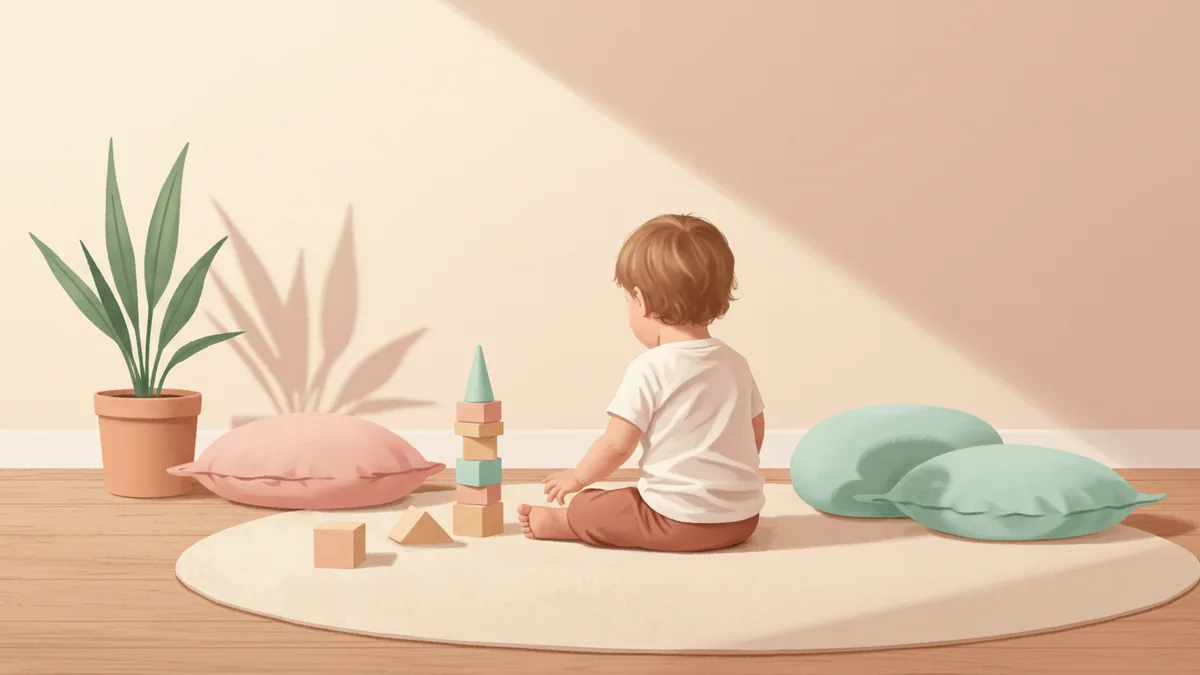
Set up a small, cozy nook with a cushion, a blanket, and one or two soft toys. Frame it as a snug, friendly place rather than a time-out. Curl up there together and read very quietly, or just sit and rest your bodies side by side.
Parent tip: Visit the calm corner when things are already peaceful, so it feels like a treat, not a consequence.
Why it helps: A predictable cozy space gives your child a clear signal that it is time to soften and settle.
Slow breathing games
Pretend to smell a flower, then gently blow out a candle. Or blow slow, floppy "dragon breaths" together. Toddlers learn breathing best by copying you, so make your own out-breath long, soft, and a little funny.
Parent tip: Place a soft toy on your child's tummy while lying down and watch it rise and fall with each slow breath.
Why it helps: Long, easy out-breaths help a revved-up body shift toward rest.
Gentle cuddle play
Skip the music and the tickling and offer slow, steady closeness instead. Try a snug "blanket burrito" wrap, slow back rubs, or rocking together in a quiet room. Let your child lead how much contact feels right.
Parent tip: Hum very softly if your child likes it, or simply stay quiet and let the room be still.
Why it helps: Slow, predictable touch is deeply reassuring and helps the whole body relax.
How a calm adult helps most of all
Here is the part that takes the pressure off: your toddler co-regulates with you. When you slow your movements, soften your voice, and breathe a little deeper, your child's body picks up on it and begins to follow. You do not have to feel perfectly calm inside, you only have to move and speak in a calmer way on the outside.
That means the most powerful tool in any of these games is simply you, present and unhurried. Put your own phone out of reach, lower your shoulders, and let this be a short break for you too. A few slow minutes can reset both of you.
Keeping things low-stimulation
When you want to help a busy toddler wind down, less really is more. Turn off background screens and loud music, tidy away a few of the busiest toys, and dim bright lights if you can. Offer one quiet thing at a time rather than a buffet of choices, and keep your words simple and few.
You might also build a gentle slow-down into your daily rhythm, perhaps a quiet stretch before nap or after a wild stretch of play. Predictable calm moments help your child learn, over time, that their big feelings always pass.
You are doing better than you think
A busy toddler is not a problem to be solved, just a small person with a big engine and not many brakes yet. Every quiet moment you offer is teaching them, gently, how to find their own calm. If you ever have concerns about your child, your pediatrician is the best person to ask. For now, slow down, breathe, and trust that your steady presence is exactly what they need.
This article is for general parenting support only and is not medical advice.