Starting solids is a big, exciting milestone — and it can also feel like a lot of pressure. How much? How often? What if your baby just pushes the spoon away? Take a breath. This is meant to be a slow, joyful introduction, not a race to "finish" a bowl. The aim of a good starting solids schedule is simply to give your baby gentle, repeated chances to explore food while milk still does the heavy lifting. Follow your baby's cues, keep it calm, and let mealtimes be playful.
Below is a first-timer's overview: how to spot readiness, what first foods can look like, a gentle sample day, how textures grow over time, and the safety basics that matter most. Every baby is different, so treat this as a friendly map, not a rulebook — and check the timing of starting solids and allergen introduction with your pediatrician, who knows your child.
Signs your baby may be ready
Age is a guide, not a starting gun. Most babies are ready for solids around 6 months, but readiness is really about development. Look for a few signs together rather than any single one:
- Sits with support and holds a steady, upright position.
- Good head and neck control — your baby can hold their head steady on their own.
- Interested in food — watching you eat, leaning in, reaching, or opening their mouth.
- Less tongue-thrust — food is more likely to stay in than be automatically pushed back out.
If your baby isn't quite there yet, that's perfectly fine — a few more days or weeks of milk is never a problem. Around 6 months is the usual window, but always confirm the right timing for your baby with your pediatrician before you begin.
First foods to offer
There's no single "perfect" first food. Many families start with soft, single-ingredient options that are easy to mash or hold:
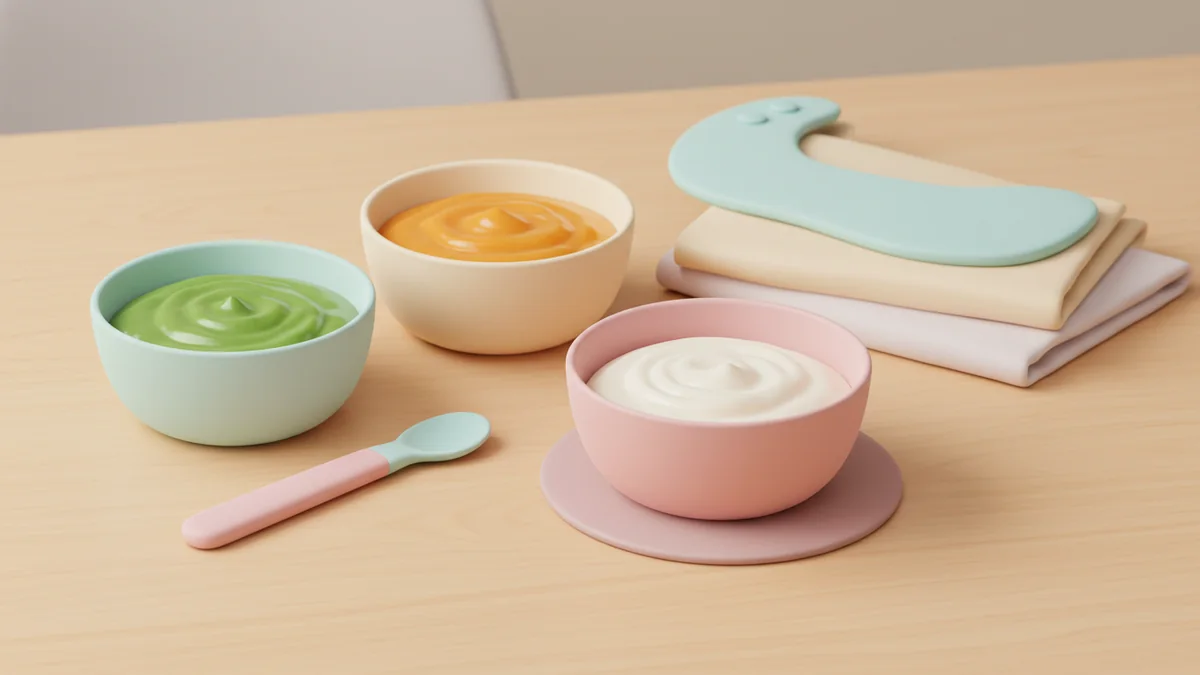
- Smooth purées or soft mash — sweet potato, carrot, pumpkin, avocado, banana.
- Iron-rich foods, which become important around this age — well-cooked, soft-mashed lentils, beans, or finely minced/soft meats, and iron-fortified infant cereal mixed loose.
- Soft cooked vegetables offered as gentle finger foods, cut into safe shapes (more on safety below).
Offer one new food at a time and watch how your baby responds. A couple of points to keep in mind: do not give honey before age 1, and when it comes to common allergens (such as egg, peanut, and dairy), the timing and approach are best discussed with your pediatrician — especially if there's a family history of allergies.
A gentle sample day (milk is still the main meal)
In the early weeks of solids, milk remains your baby's primary nutrition. Solids are a tiny "extra" — exploration, not a full replacement for any feed. Here's one relaxed shape a day might take; adjust freely to your baby and your family's rhythm:
- Morning: milk feed (breast or formula) as usual.
- Mid-morning: a few small spoonfuls or finger pieces of a soft first food — a calm 5–10 minutes, after milk so your baby isn't ravenous.
- Midday: milk feed as usual.
- Afternoon: milk feed; you can add a small solids "taste" later, once your baby is comfortable with the morning one.
- Evening: milk feed; keep the bedtime routine cozy and unhurried.
Notice there's no pressure to hit a certain amount. Some days your baby eats a few mouthfuls; some days almost nothing. Both are normal at the start. Many parents find a steady daily rhythm makes this easier — if you already use a routine helper like ParentPilot AI to nudge meals, naps, and care moments, a recurring "solids taste" reminder can fit right into the day without adding stress.
Textures and progression
Textures grow with your baby. There's no need to rush, and no prize for moving fast — let each stage settle before nudging the next:
- Start: smooth, fairly loose purées and soft mashes.
- Next: thicker mash with a little texture; soft lumps your baby can manage.
- Then: soft finger foods and small, soft pieces as your baby's pincer grasp develops.
- Over time: a wider variety of family foods, softened and cut safely, by around their first birthday.
Whether you offer mostly spoon-fed purées, mostly soft finger foods, or a mix of both, all of these can work. Choose what feels manageable for your family and comfortable for your baby.
Responsive feeding: follow your baby's cues
Responsive feeding simply means letting your baby lead the "how much." Watch for the signals and trust them:
- Hungry / interested: leaning in, opening their mouth, reaching for the spoon or food, excited little sounds.
- Full / done: turning their head away, closing their mouth, pushing food away, losing interest, fussing.
When your baby signals "done," the meal is done — even if the bowl is still half full. Please don't force, bribe, or play "one more bite" games. Letting your baby stop when full helps them keep their natural sense of hunger and fullness, and keeps mealtimes positive instead of a battle. A relaxed parent makes for a relaxed eater.
Common worries (and gentle reassurance)
"My baby barely eats anything." Totally normal early on — solids are practice. As long as milk feeds continue, tiny amounts are exactly right at first.
"They gag a lot — should I stop?" Gagging is a noisy, normal protective reflex as babies learn to move food around, and it usually eases with practice. Choking is different — silent and distressing — which is why upright seating, safe shapes, and constant supervision matter so much. If you're ever worried about your baby's eating, weight, or development, check in with your pediatrician.
"They refuse new foods." Refusal is part of learning. It can take many calm, no-pressure offers before a food is accepted, so keep offering gently without turning it into a contest.
This article is for general parenting support and is not medical advice. Please ask your pediatrician about the right timing for starting solids and introducing allergens for your baby.