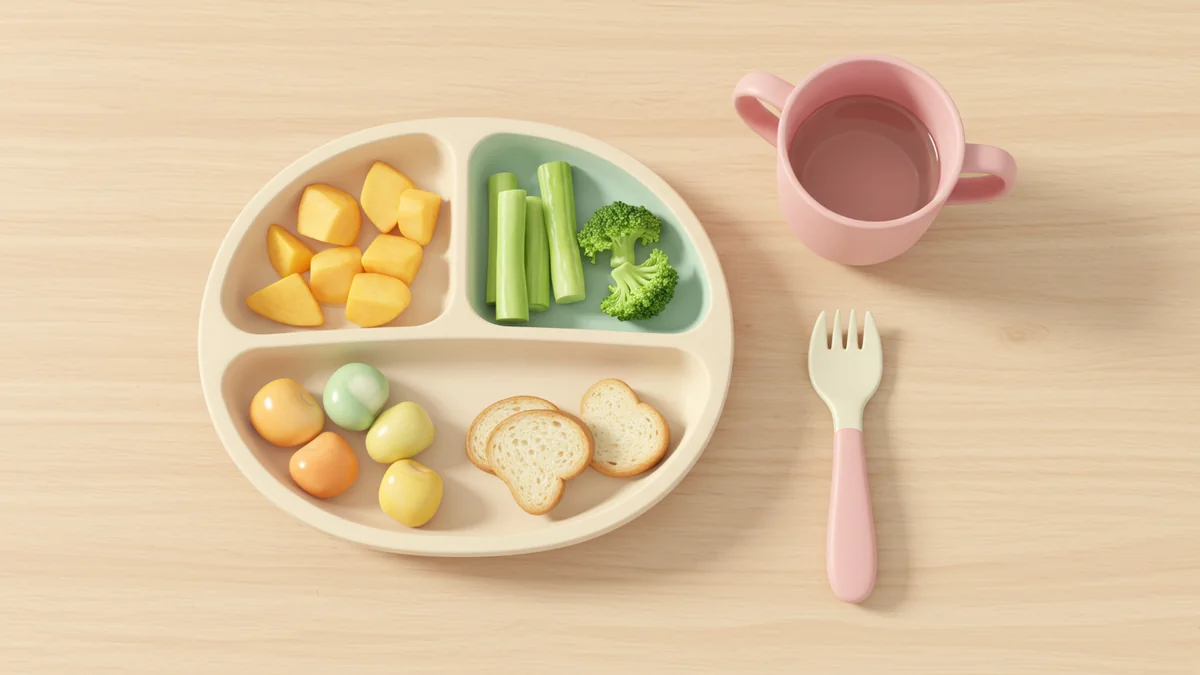
If meals at your house have turned into a battle — pleading, bargaining, a plate pushed away — please take a breath. You are not doing anything wrong, and your child is not broken. Picky eating is incredibly common between ages 0 and 5, and one of the kindest, most effective toddler picky eater tips is also the most overlooked: before you change what is on the plate, change the world around the plate. A calmer mealtime environment does a lot of quiet work, and it asks far less of both of you.
It is tempting to chase the right food — hiding vegetables, trying a new recipe every night, making three separate dinners — only to end up exhausted while your child is no more interested. The environment comes first because little ones eat best when they feel safe, unhurried, and in charge of their own bodies. Get the setting right, and food often follows on its own time.
Start with the table itself
The single most powerful change for many families is the simplest: no toys, no TV, no phones at the table — including yours. Screens and toys pull a child's attention away from the food, their hunger cues, and you. When the table is just food and company, eating becomes the interesting thing in the room again. Keep a small, predictable spot for meals so your child's body learns, "this is where we eat."
Eat together, even briefly
Children are natural copycats. When they watch you eat the same food calmly, with no fuss, it tells them that food is safe and ordinary. Sit down with your child whenever you can, even if it's just a few minutes with a cup of tea while they eat. Your relaxed presence is worth more than any clever trick — and chatting about your day works far better than commenting on every bite.
Keep meals short and pressure-free
A meal that drags on rarely ends well. Aim to keep meals to about 30 minutes or less. Toddlers don't graze slowly the way adults sometimes do; when they're done, they're done, and a long stand-off only adds stress for everyone. Ending the meal gently — "All finished? Okay, down you come" — teaches your child that mealtimes have a calm beginning and a calm end.
Offer small portions and let them stop
A heaped plate can feel overwhelming to a small child. Serve small portions and let your little one ask for more — it feels manageable, and second helpings become a tiny win you can both celebrate. Just as importantly, let your child stop when they're full. Trusting their "I'm done" today helps them stay tuned in to their own appetite, which is exactly what you want for the long run.
Serve one new food beside a liked one
New foods are easier to accept when they arrive with a familiar friend. Put a tiny amount of one new food next to something your child already likes. There's no rule that it has to be eaten — looking at it, touching it, or licking it all count as progress. It can take many calm, no-pressure encounters before a child tastes a new food, so think of it as a slow introduction, not a test.
Skip force-feeding and bribing
We've all been tempted by "just three more bites" or "finish your peas and you can have dessert." The trouble is that force-feeding and bribing tend to backfire: they make the disliked food feel like a chore and the treat feel like the real prize. It also chips away at your child's trust in their own hunger. Offer the food warmly, then let your child decide. Your job is the what, when, and where; theirs is the whether and how much.
Build a consistent meal and snack rhythm
Grazing all day means a child is never quite hungry at mealtimes — and never quite full either. A gentle, predictable rhythm of meals and planned snacks, with mostly water in between, helps your child come to the table with a real appetite. You don't need a rigid schedule down to the minute; a loose, repeating pattern your family can keep up with is plenty. Predictability itself is soothing for little ones.
What a relaxed meal can look like
Imagine this. The TV is off and the toys are in their basket. You set down a small plate: a little rice, some soft chicken your child usually eats, and a few pieces of a new vegetable off to the side. You sit down with your own plate and chat — about the dog next door, about the song you heard earlier. Your child eats the rice, ignores the new vegetable, picks it up, puts it down, and that's fine. No one mentions it. After twenty minutes they say "all done," and you cheerfully clear the plates — no bargaining, no tears, no clean-plate rule. Tomorrow, that little vegetable shows up again, just as calmly. Over many of these quiet, pressure-free meals, curiosity does the work that pressure never could.
That said, you know your child best. If your little one is losing weight, refusing most foods, gagging or choking often, or you simply feel worried about how they're eating or growing, please check in with your pediatrician. There's no shame in asking — it's one of the most caring things you can do.
This article is for general parenting support and is not medical advice.